

Category :
Client Relations & SalesMastering Lead Tracking and Client Management for Exponential Growth
To learn more techniques and how to create and grow your own travel business, sign-up to become a member today!

Looking for cutting-edge strategies, robust systems, and unwavering support you need to dominate the modern travel industry? We understand that entering the travel profession—or attempting to scale an existing agency—can feel like an overwhelming endeavor. We consistently see incredibly talented individuals with a profound passion for global exploration struggle to build sustainable businesses, not because they lack travel knowledge, but because they lack a cohesive, actionable system for managing their data.
Whether you are a newly minted travel advisor looking to secure your very first consultation, or an experienced travel professional seeking to exponentially diversify your lead generation and streamline your back-office operations, mastering the art of lead tracking is non-negotiable. It is the defining line between a chaotic, stressful hobby and a thriving, highly lucrative career. At Travel Agent Pro, our ultimate mission is to support you in achieving unparalleled success so that, someday, you can live your ultimate dream of operating your very own independent, premier travel agency.
In this comprehensive, start-to-finish masterclass, we are pulling back the curtain to show you exactly how top-tier travel professionals handle the back end of their marketing efforts. While generating marketing buzz is exciting, the real power—and the real revenue—comes from how you meticulously organize, manage, and follow up with those leads. By the end of this extensive guide, you will be equipped to plug the leaks in your sales funnel, establish undeniable organizational authority, and build a scalable client management ecosystem.
1. The Invisible Leak: Why Great Marketing Fails Without Lead Management
The most common and devastating pitfall we see among ambitious travel advisors is the "Leaky Bucket Syndrome." An advisor will spend countless hours perfecting their social media presence, investing heavily in a beautiful website, and attending every local bridal expo or community networking event. They successfully generate interest. Their marketing works. People hand over their business cards, send direct messages on Instagram, and fill out contact forms on their website.
But then, disaster strikes. Because the advisor lacks a structured lead management system, those valuable contacts are written on sticky notes, buried deep in overflowing email inboxes, or left unread in social media request folders. Days turn into weeks, and the follow-up never happens. The leads go cold, and the potential clients end up booking their $15,000 European vacation through a direct booking engine or, worse, a competitor who simply answered their email faster.
Marketing is only half of the equation. Generating a lead is merely the invitation to a conversation; tracking and managing that lead is how you actually close the sale. You can have the most brilliant marketing plan in the world, but if you do not have a fortified system to catch, organize, and nurture the leads that your marketing generates, you are simply pouring water into a bucket with a massive hole in the bottom. Your marketing budget and your precious time are being entirely wasted.
2. Redefining the "Lead" in the Travel Industry
To effectively manage your data, you must first clearly understand what you are managing. In the travel industry, a "lead" is not a guaranteed booking. A lead refers to any potential customer or client who has shown a verifiable interest in the travel products or advisory services you offer. Leads are individuals who have taken some form of action indicating their curiosity and their potential to become a paying customer in the future.
This action can take many forms:
- Providing their contact information in exchange for a free digital packing guide (a lead magnet) on your website.
- Sending you a direct message asking about the weather in Hawaii in October.
- Handing you their physical business card after you give an elevator pitch at a local Chamber of Commerce meeting.
- Filling out a detailed trip inquiry form to request a custom itinerary quote.
- Joining your private Facebook community group and answering your entry questions.
Every single one of these interactions represents a lead. They are at different stages of the buying journey—some are just dreaming, while others are ready to put down a deposit today—but they all require meticulous tracking. Your ultimate goal is to seamlessly and professionally convert that initial spark of interest into an actual paying client, assuming their travel style and budget are the right fit for your specific business model.
3. The "1,000 Client Mindset": Architecting for Scalability
When it comes to the structural integrity and marketing of your business, your primary objective must be scalability. Scalability means your business can handle rapid growth without the internal systems collapsing. You may be a solopreneur starting out today with only a handful of clients, or perhaps you haven't booked your first client yet. However, we want you to architect your business today as if you are currently managing 1,000 active clients.
Why is this mindset so critical? Because if you build a system that only works for five clients—such as relying on your physical memory, a legal pad, or a basic spreadsheet—that system will entirely break down when you hit 50 clients. You will drop the ball, miss critical payment deadlines, forget to send travel documents, and ruin your hard-earned reputation.
Embracing the 1,000 Client Mindset forces you to put the proper, professional mechanisms in place from day one. It eases the growing pains and challenges you to act like a CEO rather than an overwhelmed hobbyist. To build this scalable structure, you must honestly answer a few key questions:
- Exactly how are you managing your incoming data right now?
- How do you keep track of what is currently happening in your business at any given moment?
- What is your exact, step-by-step protocol when a new potential lead contacts you?
- What historical, securely stored data do you have on your potential leads and your past booked clients?
The answers to these questions will illuminate the gaps in your current process and dictate where you need to invest your time and resources to build a fortress of organization.
4. Tracking Marketing ROI: Knowing Where Your Leads Originate
In order to support and refine your marketing goals, you must rigorously track exactly where your leads are coming from. The real power of marketing comes from understanding your Return on Investment (ROI). If you do not know how a client found you, you are flying completely blind.
Imagine you spend three months executing a diverse marketing plan. You post consistently on a YouTube channel, you mail out 500 physical postcards to a high-income neighborhood, you attend a massive local wedding convention, and you run targeted Facebook ads. Suddenly, you get an influx of 20 new high-quality leads. This is fantastic news, but you must ask the critical question: Which marketing effort actually worked?
Did 18 of those leads find you through YouTube, while the expensive postcard campaign generated zero interest? Or did you meet all of them at the wedding convention? If you do not explicitly track the origin source of every single lead, you will not know where to confidently allocate your future time and financial budget. You might mistakenly stop making YouTube videos (which are secretly driving your business) and pour thousands of dollars into more postcards (which are failing).
Every single time a new lead enters your ecosystem, whether it is through an automated form or a manual phone call, your very first action must be to document their source. "How did you hear about my travel agency?" should be a mandatory field on every intake form and the first question you ask on every discovery call. Tracking this data allows you to intelligently double down on the marketing channels that are working and aggressively cut the ones that are draining your resources.
5. Ditching the Spreadsheets: The Necessity of a Dedicated CRM
You must carefully think through how you want to securely store and dynamically track all of this incredibly valuable client data. When you are on day one of your business, it is tempting to use basic, free tools like Microsoft Excel or Google Sheets. While a spreadsheet is certainly better than a stack of sticky notes, it is a static, archaic way to manage relationships.
Spreadsheets do not send you automated reminders when a client's final payment is due. Spreadsheets do not automatically trigger a "Welcome Home" email the day after a client returns from their honeymoon. Spreadsheets do not integrate with your email marketing software to seamlessly segment your audience. As your business grows, attempting to manage hundreds of intricate travel itineraries and client preferences in a spreadsheet will become an absolute nightmare. You will eventually have to migrate all of that messy data into a professional system anyway, so it is best to start right.
You must invest in a Customer Relationship Management (CRM) system. A CRM is the digital brain of your travel agency. It is a specialized software designed to manage your company's interactions and relationships with both current clients and potential leads. If your host agency does not offer a proprietary tool, you must invest in an industry-specific CRM system. While it requires a monthly financial investment, the ROI is massive and immediate. A CRM saves you dozens of administrative hours per week and prevents costly errors.
6. The Anatomy of an Ideal Travel CRM: Core Capabilities
Not all CRM systems are created equal, and generic business CRMs often lack the specific functionality required for the complexities of the travel industry. When selecting and setting up your CRM, you must ensure it has the robust capabilities necessary to manage the entire lifecycle of a traveler. An ideal, fully optimized client management system will seamlessly handle the following:
A. Comprehensive Client Data Tracking
Your CRM must act as a highly secure, centralized vault for all client information. This goes far beyond just a name, address, and email. You need a system that securely stores passport expiration dates, TSA PreCheck numbers, frequent flyer accounts, and dates of birth. Having this information instantly accessible allows you to book complex travel rapidly without constantly bothering the client for their details, elevating your perceived professionalism.
B. Marketing Source Attribution
As discussed, your CRM must have a dedicated, searchable field to track exactly how the client found you (e.g., "Referral from John Doe," "2024 Bridal Expo," "Organic Google Search"). Over time, this allows you to pull reporting data to see which marketing channels are yielding the highest-grossing commissions.
C. Robust Task Management and Workflow Automation
This is arguably the most powerful feature of a CRM. You need a system that allows you to build automated workflows and task reminders. When you move a lead from "Inquiry" to "Quote Sent," the CRM should automatically create a task reminding you to follow up in 48 hours. It should prompt you to send final travel documents 14 days before departure. A sophisticated task system ensures that nothing ever falls through the cracks and that every client receives white-glove service.
D. Deep Client Segmentation ("Bucketing")
Not all clients are the same, and marketing to them as a monolith is a massive mistake. Your CRM must allow you to "tag" or segment your clients into highly specific buckets based on their behavior, preferences, and demographics. Examples of valuable tags include:
- Travel Style: "Luxury," "Budget-Conscious," "Adventure," "Relaxation."
- Client Type: "Families with Toddlers," "Empty Nesters," "Honeymooners," "Corporate Groups."
- Destination Interest: "Disney Addicts," "Europe Enthusiasts," "Caribbean Cruisers."
Why is this crucial? If you secure an exclusive group rate for an adults-only, ultra-luxury river cruise in France, you do not want to email that promotion to your "Families with Toddlers" bucket. It is irrelevant to them and increases your unsubscribe rate. Proper segmentation allows you to send hyper-targeted, highly relevant marketing offers to the exact people who are most likely to buy.
E. Customer Service Dashboards
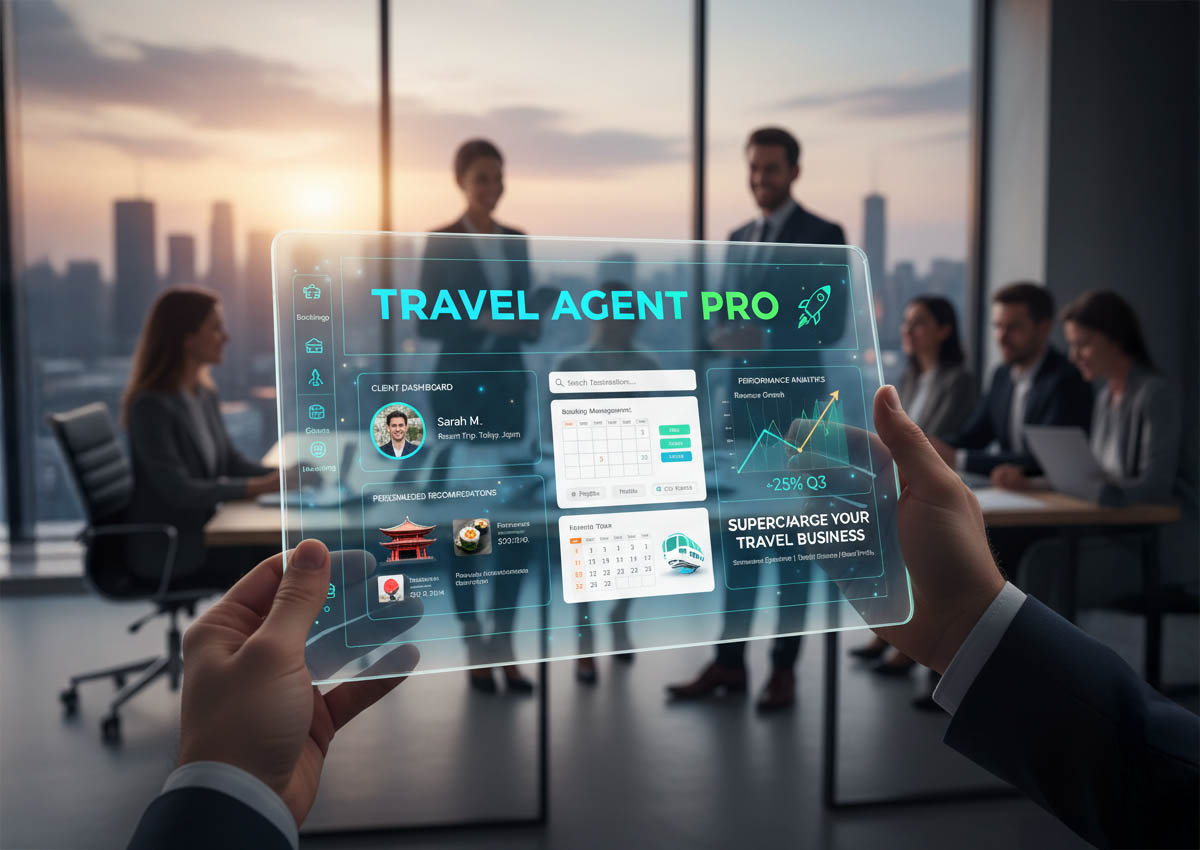
A great CRM provides a visual dashboard showing the immediate status of your entire business. You should be able to log in and instantly see: Who is traveling right now? Who is departing in the next 30 days? Who returned home yesterday? This allows you to proactively manage the customer experience—sending a text message to a client currently in transit to ensure their flight was smooth, or calling a client who just returned to ask for a review while they are still in the "vacation glow."
F. Commission Tracking and Financial Forecasting
Leads represent future revenue. Your CRM must have a robust way to track quotes, gross booking amounts, and anticipated commissions. You should be able to run a report and see exactly how much revenue is projected to hit your bank account in Q3 based on the leads you have successfully converted. This financial clarity is essential for making smart business decisions.
G. Intimate Notes and Client Preferences
The difference between a good travel agent and a world-class travel advisor lies in the details. Your CRM should have an extensive notes section where you document the minutiae of your clients' lives. Do they prefer a window or an aisle seat? Do they have a severe gluten allergy? Do they celebrate their wedding anniversary every October? Did they mention during a phone call that their son is obsessed with dinosaurs? Documenting and utilizing these intimate details allows you to surprise and delight your clients, guaranteeing their lifelong loyalty.
7. The Fortune is in the Follow-Up: Designing Your Workflow
Gathering data and putting it into a CRM is useless if you do not actively engage with that data. The true power of lead management is executing a flawless follow-up strategy. In the sales world, there is a common, agonizing statistic: the vast majority of sales professionals give up after a single follow-up attempt, yet the vast majority of high-ticket sales require five to seven points of contact before the consumer makes a decision.
Travel is an inherently personal, high-ticket investment. When a potential client inquires about a $10,000 multi-generational trip to Hawaii, they are rarely ready to hand over their credit card on the very first phone call. They need time to discuss it with their spouse, check their work schedules, and review their finances. If you send a beautifully crafted itinerary quote and then passively wait for them to respond, you will lose the sale.
You must build a standardized, relentless (yet polite) follow-up workflow into your CRM. A professional workflow might look like this:
- Day 1 (Speed to Lead): A new lead submits an inquiry on your website. Within 2 hours, they receive a personalized email acknowledging their request and containing a link to schedule a complimentary consultation call.
- Day 2 (The Consultation): You hold the discovery call, gather their deep requirements, and promise a proposal within 48 hours.
- Day 4 (The Delivery): You present the customized itinerary via a scheduled Zoom call, rather than just emailing a PDF into the void.
- Day 6 (Follow-Up 1): If they haven't deposited, you send a gentle email checking if they have any questions or need adjustments to the itinerary.
- Day 9 (Follow-Up 2): You send a value-add touchpoint, perhaps an article you wrote about the destination, reminding them of the urgency of booking before inventory sells out.
- Day 14 (The Close-Out): You make one final phone call. If they are not ready, you politely inform them that you are closing their file for now, but you will keep them on your VIP mailing list for future inspiration.
By relying on your CRM to automate these task reminders, you remove the emotional anxiety of "feeling like you are bugging them." You are simply executing a professional business process. You will be astounded by how many clients apologize for being busy and enthusiastically book on the fifth or sixth follow-up.
8. Managing the Client Journey: From Lead to Lifelong Loyalty
Lead management does not abruptly end the moment the client pays their initial deposit. In fact, that is precisely when the most critical phase of data management begins. Your goal is not to facilitate a single transaction; your goal is to create a raving fan who books with you annually and refers you to all of their high-net-worth friends.
You must track the entire lifecycle of the trip. Your CRM should trigger workflows for the pre-departure phase. Send them a curated packing list 30 days before they leave. Send them a list of recommended local restaurants 14 days before. Mail them a physical set of branded luggage tags.
Furthermore, you must utilize your tracking systems for post-trip retention. When a client returns, your CRM should remind you to call them for a debrief. Ask them what they loved and what they hated. Document all of this feedback meticulously in their profile. If they hated the massive, crowded mega-resort, you now have the data to ensure you only quote them boutique, intimate properties in the future.
Finally, use your CRM's date-tracking capabilities to generate future leads organically. If you know they traveled for their 10th wedding anniversary this year, set a task to contact them 10 months from now. "Hi Sarah, I know your 11th anniversary is coming up in a few months. Last year we did the Caribbean; are we thinking Europe this year to celebrate?" This is how you transition from hunting for cold leads to harvesting a warm, fiercely loyal client base.
9. Architecting Your Legacy with Travel Agent Pro
Building a highly lucrative, sustainable travel business does not happen by accident, and it certainly does not happen through disorganized, chaotic effort. It requires a meticulously engineered blueprint, a deep understanding of consumer behavior, and the absolute discipline to track, manage, and nurture every single piece of data that enters your ecosystem.
When you align your brilliant marketing strategies with a fortress-like lead management system, you become unstoppable. You stop letting thousands of dollars in commission slip through the cracks. You will build a magnetic brand, close sales with profound confidence, and establish a reputation as the premier, highly organized travel professional in your market.
At Travel Agent Pro, we know that with the right foundational framework, the right mentorship, and the right strategic support, any dedicated advisor can achieve remarkable success. We do not just teach you how to post on social media; we provide our members with the cutting-edge training and the robust technological recommendations they need to manage their growth flawlessly. We are deeply committed to lifting you up, refining your business acumen, and supporting your exponential trajectory every step of the way.
If you are ready to stop operating like an overwhelmed amateur, stop losing leads to a messy inbox, and start building a scalable, wildly successful travel empire, you belong with us. Let us support your journey so that you can confidently attract top-tier clients, maximize your conversions, and ultimately, live your absolute dream of owning a thriving, independent travel agency. Join Travel Agent Pro today, and let's architect your success together.
Learn more about this by signing up as a member, today! Travel Agent Pro Application Form.
To learn more techniques and how to grow your travel business, read more on our Pathfinder Series.